Chapitre 03 - Start-ups & Innovation Culture
Entrepreneuriat, disruption et financement des start-ups en contexte anglophone.
From Garage to Global Empire
Ces deux images montrent la même entreprise à deux moments différents de son histoire.
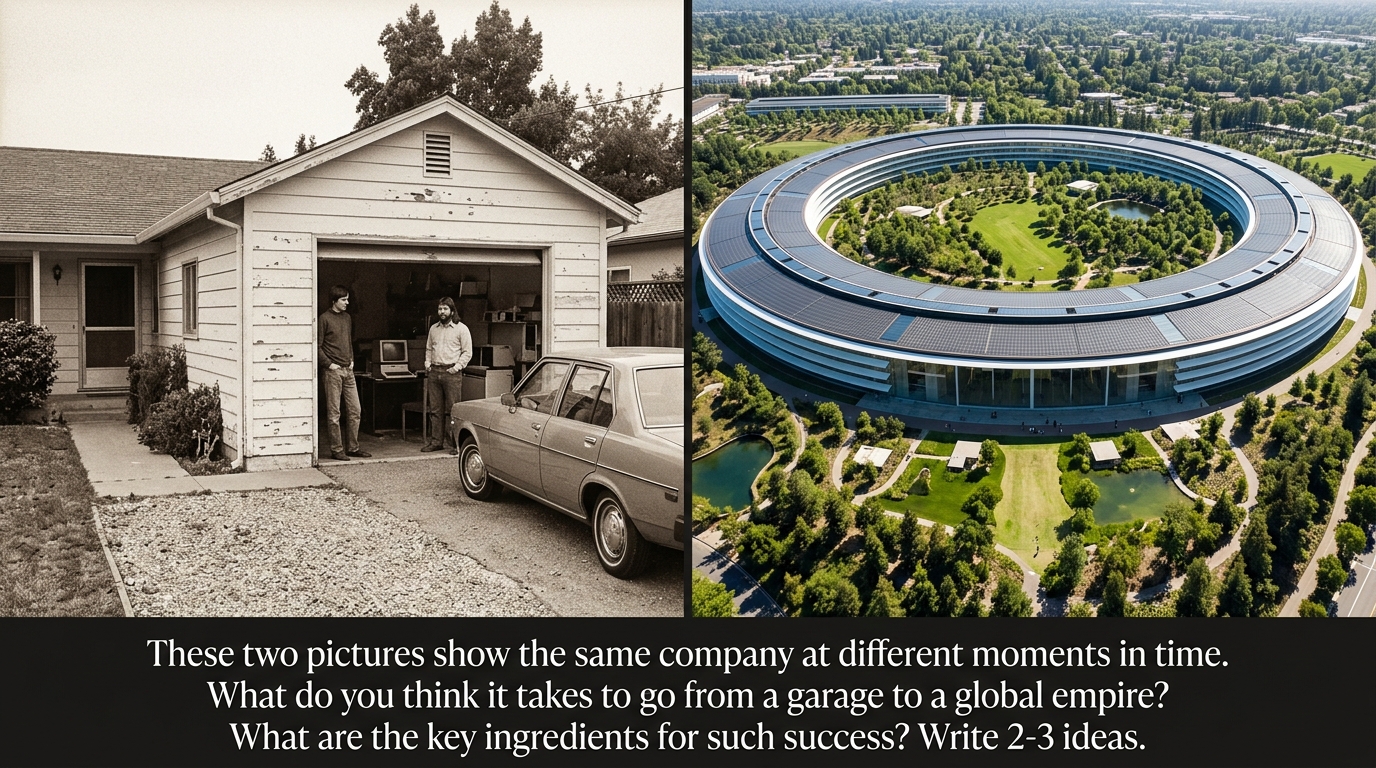
Cliquer pour agrandir
Your Turn
What do you think it takes to go from a garage to a global empire? Write 2-3 ideas about the key ingredients for such success.
Watch & Analyse
Bill Gross analyse méthodiquement pourquoi certaines start-ups réussissent et d'autres échouent. (~6 min)
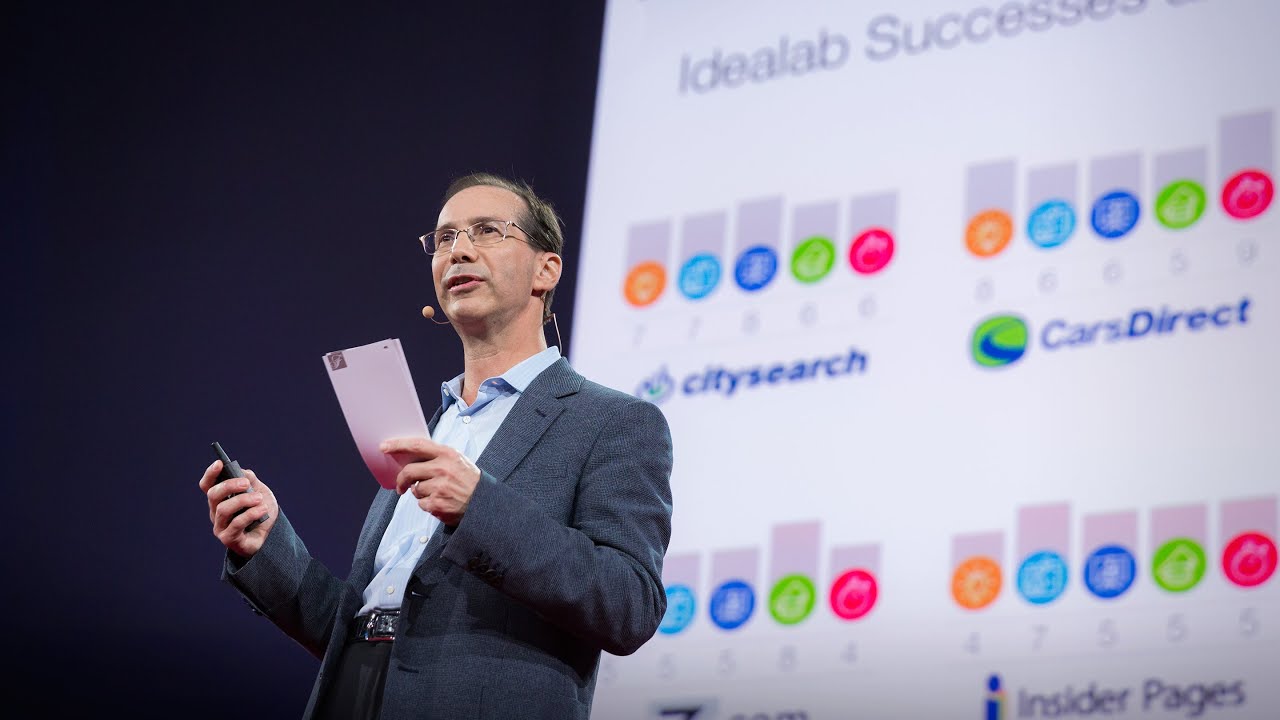
The speaker will analyse why start-ups succeed or fail. He studied hundreds of companies and identified five key factors. Predict which factor matters most - tick your guess:
Tick the five key factors the speaker mentions:
1. According to the speaker's research, which factor ranked first?
2. Note one concrete company example he gives and what it illustrates:
Do you agree with the speaker's conclusion? Give one reason why timing might be the most crucial factor for a start-up.
Read & Identify
Lis le document. Identifie mentalement : le problème résolu · la solution innovante · les chiffres clés.
Back Market: Disrupting the Electronics Industry - One Refurbished Phone at a Time
Every year, more than 50 million tonnes of electronic waste are generated worldwide. Most of it ends up in landfill, leaking toxic materials into soil and water. It was this uncomfortable reality that led three French entrepreneurs - Thibaud Hug de Larauze, Quentin Le Brouster, and Vianney Vaute - to found Back Market in Paris in 2014.
Their idea was straightforward but radical: create a marketplace where certified professional refurbishers could sell tested, repaired, and guaranteed second-hand electronic devices directly to consumers. In a market dominated by the assumption that "new is always better," Back Market was betting that timing had finally arrived for the circular economy.
"We didn't invent refurbishing - it already existed. What we built was trust. Consumers needed to know that buying refurbished was safe, reliable, and genuinely sustainable."
- Thibaud Hug de Larauze, CEO
The business model is a classic marketplace: Back Market does not own or stock any devices. Instead, it connects verified refurbishers with buyers, taking a commission on each sale. The platform currently lists over 1,500 certified professional sellers across Europe, the United States, and Japan.
Back Market's growth illustrates Bill Gross's theory about timing: by 2014, consumers were increasingly concerned about sustainability, smartphone prices were rising, and refurbishing technology had improved dramatically. The conditions were perfect for this disruption of the traditional electronics retail model.
The company continues to scale: in 2023, it launched a dedicated B2B service helping companies manage and resell their corporate device fleets - proving that the initial start-up concept could evolve and grow well beyond its original scope.
Words: ~280 · Level: B2 · Source: Adapted from press coverage and Back Market corporate communications
The Start-up Lexicon
12 termes fondamentaux du monde entrepreneurial. Tu les retrouveras dans S'exercer et Appliquer.