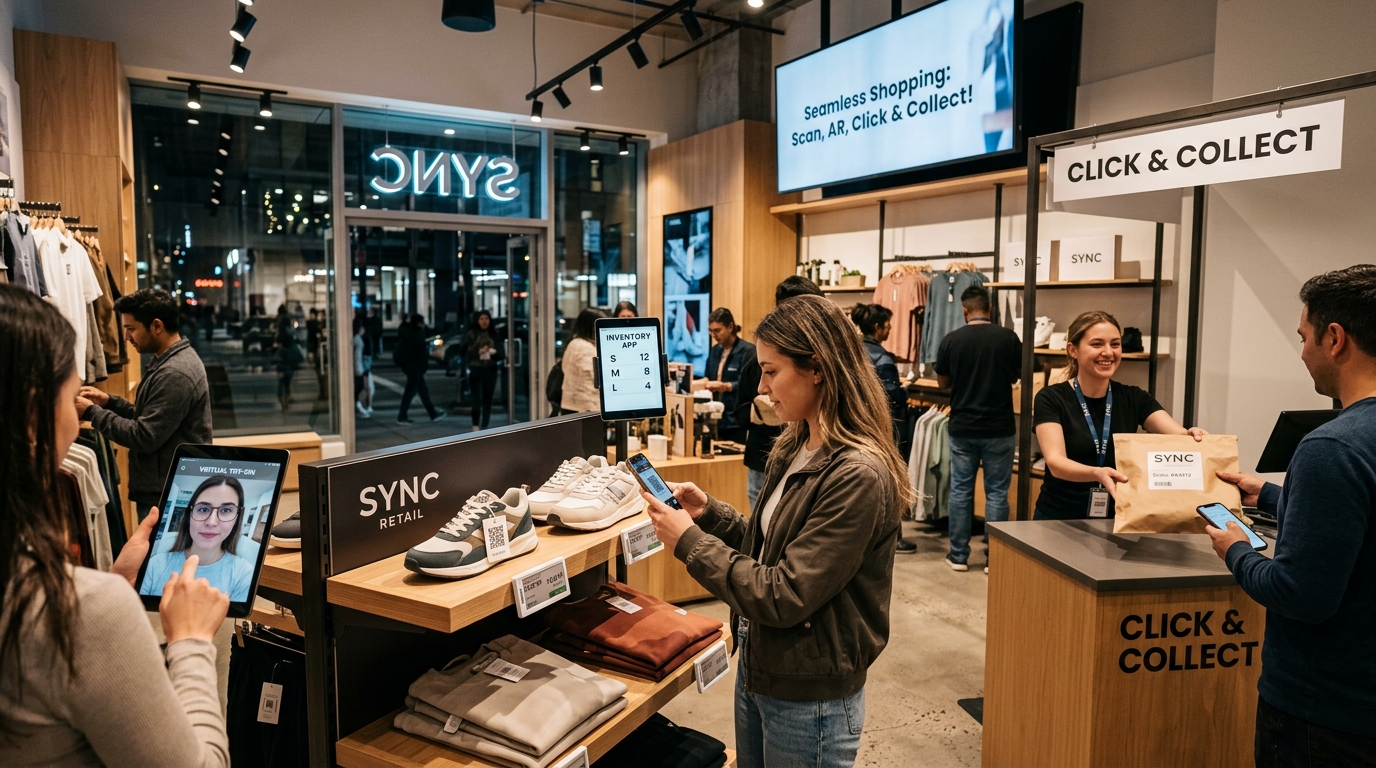
Omnichannel & Retail Trends
Tableau de bord
BTS MCO - LV1 Anglais · Thème 3

Chapitre 08 - Omnichannel & Retail Trends

Explorer les stratégies qui unifient magasin physique et expérience digitale : click & collect, phygital, parcours client sans couture.

Étape

1 / 4

Progression

0 %

Phase

Découvrir

Étape 1 / 4 - Accroche

Two Worlds, One Journey

Un client commande depuis son canapé, récupère son colis en magasin une heure plus tard, puis partage son avis en ligne - sans jamais sentir de rupture. Regarde ce service en action.
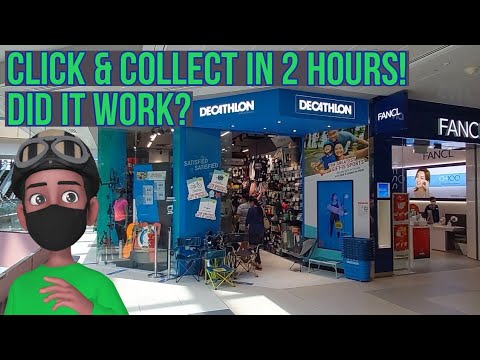
Decathlon Click and Collect
Decathlon - Click & Collect in 2 Hours · YouTube

A real customer walkthrough of a click-and-collect order, from checkout to in-store pickup.

 Your Turn

Describe, in your own words, the customer's journey from the moment they click 'Buy' to the moment they leave the store with their product. Then imagine: what would happen if the item wasn't ready on time? Write 2-3 ideas.

This blending of online ordering and physical pickup is called click & collect - one small piece of a much bigger strategy retailers call omnichannel retailing. Keep this word in mind: you'll meet it again very soon.
Étape 2 / 4 - Vidéo authentique

Bridging Store and Screen

Canada Goose - Phygital Retail, a CMO Interview. Objective : understand why a global brand is investing in technology inside its physical stores, not just online.
Before watching - Map your expectations

In your opinion, what does "phygital" mean, based on the word itself? Name two pieces of technology you might expect to find inside a modern physical store:

While watching - Vocabulary hunt

Note down every term related to blending digital and physical retail that you hear (e.g. seamless, touchpoint, experience…). Aim for at least 6 terms:

After watching

According to the CMO, why does a brand still need physical stores in a digital age? In 2-3 sentences, summarise the main reason given.

Grammar preview: Dans S'exercer, tu étudieras le first conditional - la structure idéale pour décrire les points de décision du parcours client : "If a size is out of stock in-store, the assistant will check the app for the nearest available unit." Repère ce type de logique dans la vidéo.
Étape 3 / 4 - Document écrit

Read & Analyse

Lis cet article. Repère : chiffres & statistiques termes-clés omnicanal

 Business Case Study - Retail Strategy Insight

The Omnichannel Imperative: Why Retailers Can No Longer Separate Online from In-Store

For decades, retailers organised their business around a simple divide: the physical store on one side, the website on the other - often run by separate teams with separate budgets and separate stock. That divide has now effectively collapsed. Today's shopper moves fluidly between a smartphone screen, a store aisle, and a social media feed within a single purchase decision, and expects the brand to keep up at every step.

The click & collect surge. Industry data suggests that click & collect orders now account for over 20% of total online retail sales in several major European markets, roughly triple the share recorded five years ago. For retailers, the appeal is twofold: fulfilment costs drop sharply when a customer provides the "last mile" themselves, and in-store pickup routinely drives additional impulse purchases, with some chains reporting that one in three collection visits ends in a further in-store sale.

Showrooming and its mirror image. Retailers have long worried about showrooming - customers examining a product in a physical store, then buying it online at a lower price. But research increasingly points to the opposite behaviour being just as common: webrooming, in which a shopper researches a product online, compares reviews and prices, and then completes the purchase in a physical store. This "research online, purchase offline" pattern, often called the ROPO effect, means a lost online sale is frequently not a lost sale at all - simply one that closes through a different channel.

"The retailers who still ask 'online or in-store?' are asking the wrong question. The only question that matters is whether the customer can move between the two without ever noticing the seam." - a retail transformation consultant, quoted in a 2024 industry report.

The phygital store. To close that seam, retailers are investing heavily in what industry commentators call phygital experiences - physical spaces enhanced by digital tools. Digital signage replaces static posters with real-time promotions; smart fitting rooms use RFID tags to recognise garments and suggest matching items on an interactive mirror; and endless aisle kiosks let a customer order an out-of-stock size or colour for home delivery without ever leaving the shop floor. None of this works, however, without a single technical foundation: real-time inventory visibility across every channel, so that a sales assistant, a website, and a mobile app are always showing the same stock figures.

Building this kind of unified commerce infrastructure is expensive and organisationally difficult - it typically requires merging teams, systems, and even bonus structures that were designed to compete with, rather than support, each other. But for commercial managers, the direction of travel is no longer in doubt: every touchpoint, whether a shop window, a chatbot, or a delivery text message, is now judged as part of one single, continuous customer journey.

Words: ~390  ·  Level: B2  ·  Source: Adapted from a 2024 retail strategy industry report

After reading

Identify three omnichannel practices the article describes. For each one, note a specific figure or example from the text:

Étape 4 / 4 - Vocabulaire

The Omnichannel Retail Lexicon

12 termes fondamentaux de la stratégie omnicanale. Tu les retrouveras dans S'exercer et Appliquer.

omnichannel retailing
"Our omnichannel retailing strategy lets a customer start a return online and finish it in any of our 40 stores." An approach that integrates every sales and communication channel - website, app, physical store, social media - into a single, consistent customer experience.
click and collect (BOPIS)
"Click and collect orders can now be picked up within two hours of purchase at any of our city-centre locations." A service allowing customers to order and pay online, then collect the item in person at a physical store (Buy Online, Pick-up In-Store).
phygital
"The flagship store's phygital layout combines interactive screens with traditional product displays." Describes a physical retail space enhanced by digital technology, blending the tactile experience of a shop with the convenience of online tools.
showrooming
"We noticed a rise in showrooming: customers trying on shoes here, then ordering them cheaper from a competitor's app." The practice of examining a product in a physical store before purchasing it online, often at a lower price.
webrooming (ROPO effect)
"Webrooming - the ROPO effect - explains why our website traffic keeps rising even as in-store sales grow too." The practice of researching a product online before completing the purchase in a physical store (Research Online, Purchase Offline).
seamless customer journey
"Creating a seamless customer journey meant giving every sales assistant access to a shopper's full order history." A shopping experience in which a customer can move between channels and touchpoints without friction, delay, or inconsistency.
endless aisle
"Thanks to our endless aisle kiosks, a sold-out colour in-store can still be ordered and delivered to the customer's home." An in-store digital kiosk or tablet that lets customers order items that are out of stock locally, removing the limits of physical shelf space.
digital signage
"Digital signage near the entrance now displays a different promotion every hour, based on footfall data." Electronic displays used in-store to show advertising, promotions, or wayfinding information, replacing traditional static posters.
smart fitting room
"The smart fitting room recognises each garment via its RFID tag and suggests matching accessories on the mirror screen." A changing room equipped with technology (such as RFID sensors and interactive mirrors) that identifies items and offers personalised suggestions.
unified commerce
"Moving to a unified commerce platform meant merging our online and in-store inventory systems for the first time." A single, integrated technology platform managing inventory, payment, and customer data across all sales channels simultaneously.
touchpoint
"We mapped every touchpoint in the customer journey, from the first Instagram ad to the delivery confirmation text." Any point of interaction between a customer and a brand, whether digital, physical, or human.
real-time inventory visibility
"Real-time inventory visibility means our website never advertises a product that has just sold out on the shop floor." The ability for staff, systems, and customers to see accurate, up-to-the-minute stock levels across every channel at once.
Passer à S'exercer

Aide

←/→Section précédente / suivante FPlein écran HAide