Chapitre 04 - Consumer Behaviour
Comprendre les comportements d'achat, la psychologie du consommateur et les stratégies de segmentation.
Who's in Your Store?
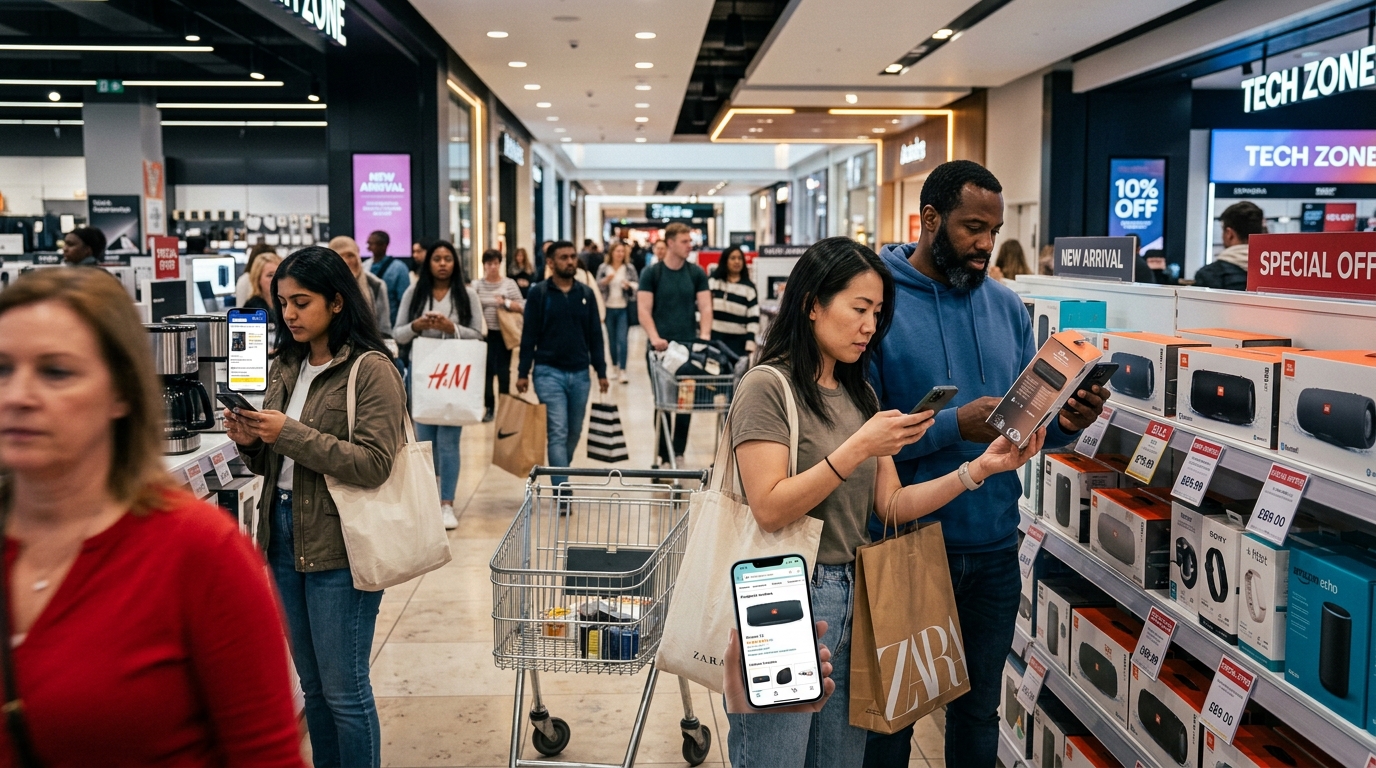
Regarde cette vidéo courte : elle montre différents profils de clients en action. Observe leurs comportements.
Vidéo bientôt disponible
Passe à l'étape suivante en attendant sa mise en ligne.
Observe the different types of shoppers and their behaviours.
Your Turn
What would a store manager need to understand about these different types of shoppers? Write 2-3 ideas.
Watch & Analyse
Sheena Iyengar challenge une idée reçue du retail : « more choice is always better for sales ». (~9 min, niveau B2)

The speaker is a researcher who studies consumer choice. She will challenge a common belief in retail: "more choice is always better for sales."
What do you think: does offering 50 different products sell more than offering 10? Write your prediction and one reason.
The speaker describes a famous experiment. Note down:
Identify three specific strategies the speaker recommends to help customers make decisions more easily. Note them in your own words.
Think about a store you know well. Using the modal 'should' or 'could', suggest one concrete way this store could apply the speaker's research to improve their sales.
Read & Highlight
Lis ce rapport de consommation. En lisant, utilise deux couleurs : données chiffrées motivations qualitatives
The New Consumer Equation: Post-Pandemic Shopping Behaviour in 2024
The retail landscape has undergone a fundamental transformation since 2020. According to Deloitte's 2024 Global Consumer Survey - which tracked purchasing habits across 14 countries - the relationship between consumers and brands has been permanently reshaped by four converging forces: digitalisation, sustainability concerns, inflationary pressure, and a growing demand for authenticity.
Digital trust as the new currency. The survey reveals that 78% of consumers now consult online reviews before making any purchase over €20 - up from 54% in 2019. More significantly, 64% report that a product's average rating directly determines whether they even enter a store to examine it. This "pre-store digital filter" represents a strategic challenge for physical retailers who must now compete for consumer attention before any in-store interaction takes place.
Sustainability: aspiration meets budget reality. While 71% of respondents under 40 state that a brand's environmental commitment influences their purchasing decisions, only 38% are willing to pay more than 10% above standard market price for certified sustainable products. This "sustainability gap" between intention and spending behaviour has intensified as food price inflation averaged 12.4% across Europe between 2021 and 2023, forcing many consumers to compromise their ethical preferences for economic necessity.
Strategic implications. The data indicates that effective retail in 2024 requires three fundamental capabilities: a proactive digital reputation management strategy, a credible and measurable sustainability narrative, and genuinely integrated omnichannel customer journeys. Brands that master all three are 2.4 times more likely to achieve above-average revenue growth compared to those that address only one.
Words: ~310 · Level: B2 · Source: Adapted from Deloitte Global Consumer Insights Survey 2024
After reading
Note the three most surprising findings from this report:
The Consumer Behaviour Lexicon
12 termes fondamentaux du comportement consommateur. Tu les retrouveras dans S'exercer et Appliquer.